- English
- Español
- Português
- русский
- Français
- 日本語
- Deutsch
- tiếng Việt
- Italiano
- Nederlands
- ภาษาไทย
- Polski
- 한국어
- Svenska
- magyar
- Malay
- বাংলা ভাষার
- Dansk
- Suomi
- हिन्दी
- Pilipino
- Türkçe
- Gaeilge
- العربية
- Indonesia
- Norsk
- تمل
- český
- ελληνικά
- український
- Javanese
- فارسی
- தமிழ்
- తెలుగు
- नेपाली
- Burmese
- български
- ລາວ
- Latine
- Қазақша
- Euskal
- Azərbaycan
- Slovenský jazyk
- Македонски
- Lietuvos
- Eesti Keel
- Română
- Slovenski
- मराठी
- Srpski језик
- שפה עברית
- беларускі
- Bosanski
- ქართული
- O'zbek

How Does Solar Fuse Protection Reduce Risk in High-Voltage PV Systems?
Article Summary
Solar power systems are expected to run for years under heat, humidity, voltage fluctuation, reverse current, and constant load changes. Yet many project failures begin with a small protection mistake: a fuse that is not rated correctly, installed poorly, or selected only by price. This article explains how Solar Fuse Protection helps protect PV strings, combiner boxes, inverters, and maintenance teams by interrupting dangerous overcurrent and short-circuit conditions before they spread across the system. It also gives buyers, EPC teams, distributors, and plant operators a practical way to compare fuse specifications, avoid common selection errors, and build safer long-term PV protection plans.
Table of Contents
- Article Outline
- Why Solar Fuse Protection Matters More Than Many Buyers Realize
- Common Pain Points in PV System Protection
- How Solar Fuse Protection Works in a PV Circuit
- Solar Fuse Protection Selection Factors
- Mistakes That Can Increase System Risk
- Installation and Maintenance Considerations
- Working With a Reliable Fuse Manufacturer
- FAQ About Solar Fuse Protection
- Contact Us
Article Outline
- Explain the real function of Solar Fuse Protection in high-voltage PV systems.
- Identify the risks caused by incorrect fuse selection, poor matching, and harsh outdoor conditions.
- Compare important fuse factors such as voltage rating, current rating, breaking capacity, temperature resistance, and certification.
- Offer practical guidance for buyers choosing PV fuses for utility, commercial, and distributed solar projects.
- Help readers understand why a qualified fuse supplier can reduce safety, maintenance, and downtime risks.
Why Solar Fuse Protection Matters More Than Many Buyers Realize
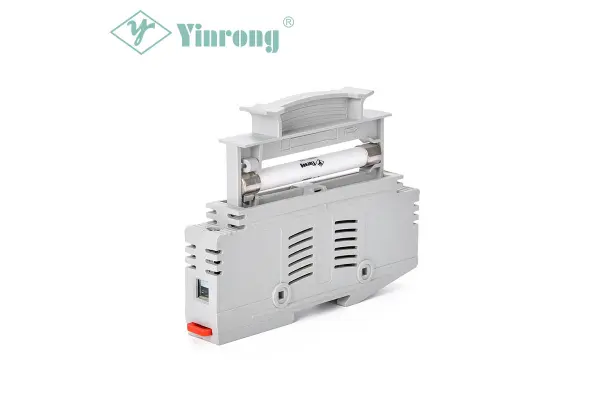
In a solar power system, the fuse is not the largest component, the most visible component, or the most expensive component. That is exactly why it is easy to underestimate. Buyers often spend weeks comparing panels, inverters, mounting systems, and monitoring platforms, then leave fuse selection to the final stage of procurement. That small delay can create a large hidden risk.
Solar Fuse Protection is designed to interrupt abnormal current before it damages PV strings, combiner boxes, cables, connectors, and downstream equipment. When a fault occurs, the fuse must react fast enough to isolate the problem without allowing heat, arcing, or reverse current to spread. In high-voltage DC systems, this is especially important because DC arcs can be more persistent than AC arcs and are harder to extinguish once they form.
For a residential rooftop system, one failed string may be inconvenient. For a commercial rooftop, solar farm, or utility-scale PV plant, the consequences can be much more serious. A poorly selected fuse may cause nuisance interruptions, delayed fault clearing, cable overheating, inverter stress, or repeated maintenance visits. In the worst cases, it can turn a manageable electrical fault into equipment damage or a safety incident.
That is why experienced project teams do not treat fuses as generic accessories. They treat them as precision safety components. The right fuse helps the system operate with greater stability, supports long-term asset protection, and gives operators clearer fault isolation when something goes wrong.
What Pain Points Does Solar Fuse Protection Help Solve?
Most buyers are not looking for a fuse because they enjoy reading technical datasheets. They are looking for a way to avoid failure. The real questions are usually practical: Will this fuse match my PV string current? Can it handle the DC voltage? Will it survive outdoor heat? Can it fit inside my existing combiner box? Will it trip correctly during a fault instead of failing silently?
Below are the common pain points that Solar Fuse Protection is expected to solve in real projects:
- Overcurrent damage: PV strings can experience abnormal current caused by reverse current, short circuits, wiring faults, or equipment failure. A proper fuse helps interrupt that current before nearby components are damaged.
- High-voltage DC arc risk: Modern PV systems often operate at high DC voltage. If the fuse cannot safely break the circuit, dangerous arcing may continue after the fault begins.
- Combiner box protection: Dense combiner box designs require compact, reliable fuses that protect each string without wasting space or increasing heat buildup.
- Remote maintenance pressure: Solar farms are often located far from service teams. A low-quality fuse that fails prematurely can create avoidable truck rolls and costly downtime.
- Specification uncertainty: Many buyers struggle to match voltage, current, size, breaking capacity, fuse holder compatibility, and certification requirements in one product.
A good protection plan does not only ask, “Can this fuse carry the current?” It asks, “Can this fuse interrupt the fault safely under the actual operating conditions of this PV system?”
How Solar Fuse Protection Works in a PV Circuit
A solar fuse is installed in the circuit to protect conductors and equipment from excessive current. Under normal operation, current flows through the fuse element without interruption. When current exceeds the designed threshold for a specific time-current condition, the fuse element melts and opens the circuit. This stops the fault current and prevents the affected string or branch from continuing to feed the fault.
In PV systems, fuses are commonly used in string protection, combiner boxes, inverter input circuits, and other DC-side protection points. Their role is especially important when multiple strings are connected in parallel. If one string develops a fault, current from healthy strings may flow backward into the faulty string. Without proper Solar Fuse Protection, this reverse current can overheat cables and components.
The most suitable PV fuse should be designed for DC operation, not simply borrowed from a general AC application. DC circuits require reliable arc-extinguishing performance because the current does not naturally pass through zero in the same way AC current does. This means the fuse must be built with suitable internal materials, element design, and arc-quenching structure.
A well-designed solar fuse should provide three layers of value: it should carry normal operating current without nuisance blowing, react predictably during a fault, and safely interrupt the circuit within its rated voltage and breaking capacity. When these three conditions are met, the fuse becomes a small but decisive part of the entire PV safety strategy.
Which Solar Fuse Protection Factors Should Buyers Compare?
The cheapest fuse is rarely the safest choice, and the highest-rated fuse is not automatically the correct choice either. Buyers should compare the fuse against the actual system design. The following table summarizes the most important selection factors.
| Selection Factor | Why It Matters | Buyer Checkpoint |
|---|---|---|
| DC voltage rating | The fuse must be rated to safely interrupt the maximum DC voltage of the PV system. | Confirm whether the system is designed for 1000VDC, 1500VDC, or another voltage level. |
| Current rating | The fuse must carry normal operating current but open during abnormal overcurrent conditions. | Match the fuse rating to string current, design margin, and manufacturer recommendations. |
| Breaking capacity | A fuse must safely interrupt the maximum possible fault current without rupture or unsafe arcing. | Review the short-circuit current conditions of the PV array and combiner box design. |
| Fuse size and holder compatibility | Incorrect size can cause installation delays, poor contact, or unsafe replacement practices. | Check dimensions, mounting method, holder model, and heat dissipation space. |
| Temperature performance | Outdoor PV equipment may face intense heat, freezing weather, and daily thermal cycling. | Choose fuses designed for stable performance in real environmental conditions. |
| Certification and standard compliance | Recognized standards help verify that the fuse has been tested for PV protection use. | Ask for documentation, test data, and applicable compliance information before bulk purchase. |
| Supplier technical support | Incorrect matching often happens when buyers rely only on a product name or price list. | Work with a manufacturer that can review application details and recommend suitable options. |
This comparison process is useful not only for new projects but also for replacement programs. When old fuses are replaced, the correct approach is not to copy the label blindly. The system may have been upgraded, the operating environment may have changed, or previous fuse selection may have been imperfect from the start.
What Mistakes Can Weaken Solar Fuse Protection?
Many PV protection problems come from simple mistakes that could have been avoided during design or procurement. One common mistake is selecting a fuse only by ampere rating. Current rating matters, of course, but it is only one part of the decision. Voltage rating, breaking capacity, application category, temperature behavior, and holder compatibility all affect safety.
Another mistake is using a general-purpose fuse in a PV circuit. A standard fuse may appear similar from the outside, but the internal structure may not be suitable for high-voltage DC interruption. In a PV fault, that difference can become critical. The fuse must be designed to handle DC arc conditions and the operating characteristics of photovoltaic systems.
Buyers should also avoid mixing fuse brands and holders without checking compatibility. A poor contact surface can increase resistance, create heat, and reduce long-term reliability. In a combiner box, this can be difficult to notice until discoloration, melting, or nuisance failures appear.
Storage and handling are also important. Fuses should be protected from moisture, contamination, heavy impact, and improper installation. A fuse is a safety device, not a loose metal part to be thrown into a toolbox. When maintenance teams treat replacement fuses casually, they increase the chance of hidden damage or wrong installation.
Finally, some projects fail to maintain a proper spare fuse inventory. When a site does not have matching replacement fuses available, technicians may install whatever looks close enough. That shortcut can compromise the protection design. A better approach is to define spare models at the procurement stage and keep them clearly labeled for future maintenance.
How Should Solar Fuses Be Installed and Maintained?
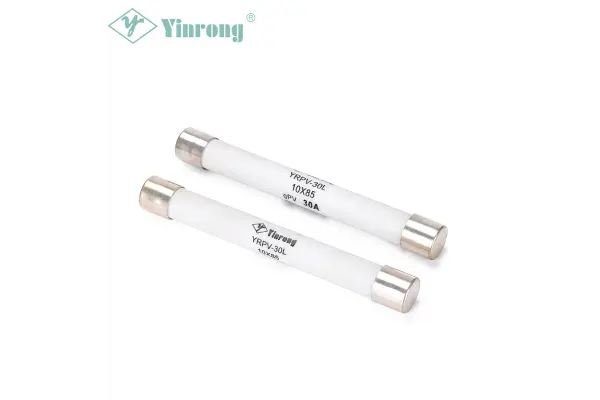
Even the right fuse can perform poorly if installation is careless. Before installation, technicians should confirm the fuse model, voltage rating, current rating, and holder compatibility. The circuit should be safely isolated, and all work should follow the project’s electrical safety procedures.
During installation, contact quality is one of the most important details. Loose connections can create heat. Over-tightened connections can damage terminals or holders. The correct torque should follow the fuse holder or equipment manufacturer’s instructions. After installation, the fuse should sit firmly in place without visible deformation, contamination, or poor alignment.
Maintenance teams should inspect PV protection points regularly, especially in harsh environments such as deserts, coastal regions, high-humidity areas, industrial zones, and rooftop projects with limited ventilation. Signs such as discoloration, cracked holders, unusual odor, melted insulation, corrosion, or repeated fuse operation should be investigated immediately.
A fuse that has operated during a fault should not be reused. The safest practice is to replace it with a properly matched new fuse and identify the root cause of the fault before restarting the circuit. Replacing the fuse without diagnosing the problem may lead to repeated failure and additional equipment stress.
For large PV plants, operators should keep a maintenance record that includes fuse model, installation location, replacement date, observed fault condition, and technician notes. This record helps identify recurring issues, weak strings, overloaded circuits, or environmental problems that may not be obvious from a single inspection.
Why Work With a Reliable Fuse Manufacturer?
Solar protection is not only a product purchase. It is a matching decision. A reliable manufacturer can help buyers understand whether a fuse is appropriate for a specific voltage level, current range, installation environment, and protection point.
Zhejiang Galaxy Fuse Co., Ltd. provides fuse solutions for modern electrical protection needs, including solar power protection, EV automotive protection, EVSE equipment protection, energy storage, industrial power, and high-speed fuse applications. For buyers working across PV systems, energy storage, charging infrastructure, or DC power distribution, this broader product background can be valuable because these applications often share the same demand for safe, stable, and application-specific overcurrent protection.
Project buyers should look for a supplier that can provide clear product specifications, stable manufacturing quality, application guidance, and responsive communication. In real procurement, this can save time and reduce uncertainty. It also helps avoid the frustrating situation where the product arrives on site but does not match the holder, voltage level, project standard, or maintenance expectation.
When evaluating suppliers, ask practical questions. Can they explain the difference between PV fuses and general DC fuses? Can they recommend suitable models based on string configuration? Can they support batch consistency? Can they provide documents needed for project review? Can they respond quickly when the project team needs technical confirmation?
These questions matter because a PV system is a long-term investment. A protection component that saves a few cents today but causes repeated maintenance tomorrow is not a low-cost option. It is simply a delayed cost.
FAQ About Solar Fuse Protection
Q1: Is Solar Fuse Protection necessary for every PV system?
Solar Fuse Protection is commonly required where overcurrent, reverse current, or short-circuit risk needs to be controlled. The exact protection design depends on the system layout, number of strings, inverter design, voltage level, and local electrical requirements. Buyers should confirm protection needs during system design rather than after installation.
Q2: Can a normal DC fuse be used instead of a PV fuse?
Not every DC fuse is suitable for photovoltaic protection. PV systems have specific operating characteristics, including high DC voltage, reverse current risk, outdoor conditions, and multiple parallel strings. A fuse used in PV circuits should be designed and rated for that application.
Q3: What happens if the fuse rating is too high?
If the fuse rating is too high, it may not operate quickly enough during a fault. This can allow cables, connectors, or equipment to overheat. A fuse should not be oversized simply to avoid nuisance blowing; it should be selected according to the actual circuit design.
Q4: What happens if the fuse rating is too low?
If the rating is too low, the fuse may operate during normal current fluctuation, causing unnecessary downtime. This can be especially frustrating in high-irradiance conditions when PV output rises. Correct selection balances normal operation and fault protection.
Q5: Should solar fuses be replaced after a fault?
Yes. Once a fuse has operated, it should be replaced with a properly matched new fuse. The fault cause should also be investigated before the circuit is restored. Simply replacing the fuse without checking the system may hide a deeper problem.
Q6: How often should PV fuses be inspected?
Inspection frequency depends on the site environment and maintenance plan. Systems exposed to heat, humidity, salt mist, dust, or heavy load cycling may need more frequent checks. Visual inspection should include fuse holders, terminals, discoloration, corrosion, and signs of overheating.
Q7: What information should I provide when asking for a fuse recommendation?
Useful information includes system voltage, string current, number of parallel strings, combiner box layout, fuse holder type, installation environment, certification needs, and expected replacement quantity. The more complete the information, the more accurate the recommendation.
Build Safer PV Protection From the Fuse Level Up
The reliability of a solar power system depends on thousands of details, and fuse selection is one of the details that should never be left to guesswork. Proper Solar Fuse Protection helps reduce overcurrent risk, protect valuable equipment, simplify maintenance, and support safer long-term operation.
If you are selecting fuses for a PV project, upgrading combiner box protection, comparing DC protection options, or looking for a manufacturer that can support practical application needs, Zhejiang Galaxy Fuse Co., Ltd. can help you review suitable fuse solutions for your system. For product selection support, project consultation, or quotation details, please contact us today and tell us what your solar protection project requires.