- English
- Español
- Português
- русский
- Français
- 日本語
- Deutsch
- tiếng Việt
- Italiano
- Nederlands
- ภาษาไทย
- Polski
- 한국어
- Svenska
- magyar
- Malay
- বাংলা ভাষার
- Dansk
- Suomi
- हिन्दी
- Pilipino
- Türkçe
- Gaeilge
- العربية
- Indonesia
- Norsk
- تمل
- český
- ελληνικά
- український
- Javanese
- فارسی
- தமிழ்
- తెలుగు
- नेपाली
- Burmese
- български
- ລາວ
- Latine
- Қазақша
- Euskal
- Azərbaycan
- Slovenský jazyk
- Македонски
- Lietuvos
- Eesti Keel
- Română
- Slovenski
- मराठी
- Srpski језик
- שפה עברית
- беларускі
- Bosanski
- ქართული
- O'zbek

How Does Solar Power Protection PV Fuse Prevent Costly PV System Failures?
Article Summary
Choosing the right Solar Power Protection PV Fuse is not just about matching amps on a datasheet. In real solar applications, the wrong fuse can lead to repeated downtime, overheating, damaged holders, avoidable service visits, and even unsafe DC arc conditions. This article explains what a PV fuse does, why solar circuits need dedicated protection, how to size and evaluate fuse performance, and which mistakes cause the most expensive failures in the field. It also includes a clear checklist, a comparison table, and frequently asked questions to help readers make better purchasing and engineering decisions.
Contents
- Outline
- Why does PV fuse selection matter so much?
- What is a Solar Power Protection PV Fuse?
- What customer pain points does the right fuse solve?
- How should buyers choose the right PV fuse?
- Which features separate a dedicated PV fuse from a general fuse?
- What mistakes lead to premature failure?
- Why does manufacturing consistency matter?
- FAQ
- Final thoughts
Outline
- The hidden cost of poor overcurrent protection in solar systems
- The role of a Solar Power Protection PV Fuse in DC photovoltaic circuits
- The most common purchasing and application problems
- A step-by-step buying and sizing framework
- A side-by-side table for practical product evaluation
- Field mistakes that shorten fuse life or weaken protection
- Why supplier capability affects long-term reliability
- Answers to common buyer and engineer questions
In solar projects, people usually focus on modules, inverters, cables, and mounting structures first. That makes sense, because those parts look large, expensive, and highly visible. But when a photovoltaic system suffers a shutdown, the root cause is often hidden in a much smaller component. A poorly selected fuse can create repeated replacement work, unexpected heat rise, lost generation time, and frustrating troubleshooting cycles.
That is why a dedicated Solar Power Protection PV Fuse deserves much more attention during design, procurement, and maintenance planning. In a DC solar circuit, fault interruption is not a casual detail. Solar strings behave differently from ordinary electrical loads, and a fuse that works in a general-purpose application may not perform properly in a photovoltaic one. For buyers and technical teams, the goal is simple: protect the system without creating a new weak point.
Companies such as Zhejiang Galaxy Fuse Co., Ltd. have focused on photovoltaic fuse development because solar applications demand more than a standard overcurrent part. What buyers really need is not just a product that “fits,” but one that helps maintain stable performance over time, especially in systems exposed to thermal cycling, outdoor environments, and demanding DC operating conditions.
Why does PV fuse selection matter so much?
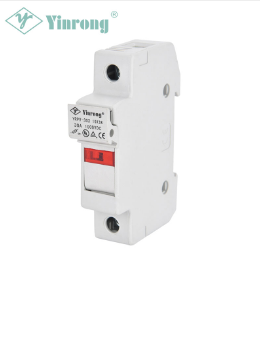
Solar installations are expected to run reliably for years under changing temperatures, sunlight intensity, and load behavior. In that environment, overcurrent protection has a direct effect on uptime. When the wrong fuse is installed, the problem may not show up on day one. Instead, it appears later as nuisance operation, poor contact stability, overheating, maintenance calls, or damage inside fuse holders and combiner boxes.
The bigger issue is that DC interruption is inherently demanding. In alternating current systems, the waveform naturally crosses zero, which helps interrupt an arc. In direct current systems, that natural break does not happen the same way. This is one reason photovoltaic circuits require components designed specifically for solar protection conditions. Buyers who treat PV fuse selection as a low-priority purchase often end up paying more through labor, downtime, and replacement costs.
What is a Solar Power Protection PV Fuse?
A Solar Power Protection PV Fuse is a fuse specifically designed to protect photovoltaic circuits against overcurrent and fault conditions. It is built for the electrical characteristics of solar string systems, where continuous DC operation, environmental stress, and reverse current risk all matter.
- It helps isolate abnormal current before damage spreads through the circuit.
- It is selected according to the voltage, current, and fault behavior of a PV application.
- It is typically paired with suitable fuse holders and installed in combiner boxes, string protection assemblies, and related PV protection positions.
- It is intended to support safer, more stable operation across solar installations.
What customer pain points does the right fuse solve?
Most buyers are not shopping for a fuse because they love discussing small protective components. They are trying to avoid real project pain. The right fuse selection helps solve several practical problems at once.
| Customer Pain Point | What Usually Causes It | How the Right PV Fuse Helps |
|---|---|---|
| Repeated fuse replacement | Incorrect current sizing, poor thermal endurance, or use of a non-specialized fuse | Improves tolerance for actual PV operating conditions and reduces nuisance failures |
| Combiner box overheating | High contact resistance, poor fit, unstable clamping pressure, or incompatible holder design | Supports more stable electrical contact and safer operation |
| Unexpected maintenance costs | Premature fatigue, inconsistent product quality, and weak field durability | Reduces service interruptions and replacement frequency |
| Difficulty standardizing parts | Mixed dimensions, changing quality between batches, and incomplete technical data | Helps create more predictable BOM planning and installation workflow |
| Concern about DC fault interruption | General-purpose components used in a solar environment | Provides protection intended for PV circuit requirements |
Put simply, a properly chosen Solar Power Protection PV Fuse is about more than compliance on paper. It is about reducing operational friction. That matters to solar plant owners, EPC contractors, panel builders, distributors, and maintenance teams alike.
How should buyers choose the right PV fuse?
If you want a cleaner buying process, do not begin with price alone. Start with application fit. A cheaper fuse that creates one avoidable field visit is rarely the cheaper option in practice. A better way to evaluate a fuse is to move through a short, disciplined checklist.
-
Check system voltage first
The fuse rating must match or exceed the voltage demands of the PV circuit where it will be installed. This is a foundational selection point in solar applications. -
Review current rating carefully
Do not size by guesswork or copy another project blindly. Real operating current, safety margins, and project conditions all matter. -
Confirm suitability for photovoltaic protection
A fuse used in solar service should be intended for photovoltaic applications rather than treated as a generic substitute. -
Evaluate interrupting capability
The fuse must be able to clear expected fault conditions safely. This is especially important as PV systems scale up. -
Look at material and construction quality
Body material, end cap finishing, dimensional consistency, and holder compatibility affect heat rise, fit, and service life. -
Ask about consistency across production batches
Stable quality is crucial if you want predictable performance from project to project. -
Request technical support when needed
A serious manufacturer should be able to discuss application conditions instead of only quoting a price.
Buyers who follow this sequence usually make faster and better decisions. They also avoid one of the most common procurement mistakes: selecting a fuse only after the mechanical design is already locked in. In practice, electrical performance and installation compatibility should be evaluated together.
Which features separate a dedicated PV fuse from a general fuse?
One of the easiest ways to create trouble in a solar project is to assume that “a fuse is just a fuse.” It is not. A dedicated photovoltaic fuse is built with the specific operating profile of solar circuits in mind. That difference affects durability, fault interruption behavior, and long-term stability in the field.
| Evaluation Point | Dedicated Solar Power Protection PV Fuse | General-Purpose Alternative |
|---|---|---|
| Application focus | Designed for photovoltaic circuit protection | May be intended for broader or unrelated electrical use |
| DC operating suitability | Built with solar DC protection needs in mind | May not be optimized for solar DC conditions |
| Thermal cycling tolerance | Better aligned with repetitive solar operating patterns | May fatigue sooner in field conditions |
| Dimensional consistency | Typically better suited for standardized holder matching | Can vary and create contact issues |
| Buyer support value | Often includes stronger application guidance | Frequently sold as a generic replacement item |
This is why serious buyers often prefer to work with manufacturers that understand photovoltaic protection as a system-level issue. Zhejiang Galaxy Fuse Co., Ltd. is one example of a company positioned around fuse solutions for solar applications, and that type of specialization matters when customers want more than a simple catalog transaction.
What mistakes lead to premature failure?
Even a strong product can underperform if the buying or installation decision is careless. Below are the mistakes that most often create avoidable PV fuse problems.
-
Choosing by price only
Low upfront cost can hide poor fit, shorter life, and extra labor later. -
Ignoring holder compatibility
A fuse that does not match the holder properly can create poor contact pressure and localized heating. -
Assuming all DC fuses are equal
Solar applications require dedicated thinking, not generic substitution. -
Skipping real application review
Ambient temperature, outdoor exposure, and system architecture all affect protection performance. -
Overlooking production consistency
One good sample is not enough. Projects need repeatable quality. -
Buying without technical dialogue
If the supplier cannot discuss your use case in detail, the risk of mismatch rises fast.
A surprising number of “product failures” are actually selection failures. That distinction matters because it changes how smart buyers approach sourcing. Instead of asking only “What is the unit price?”, they ask “Will this part still be the right choice after one summer, one rainy season, and one maintenance cycle?”
Why does manufacturing consistency matter?
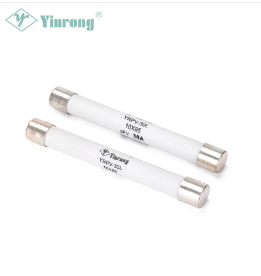
In solar projects, consistency is not a luxury. It is part of reliability. If one shipment performs differently from the next, the project team loses time, confidence, and money. This is especially important for distributors, panel builders, and EPC buyers who want standardization across repeated orders.
Manufacturing capability affects dimensional accuracy, material control, assembly stability, and delivery reliability. It also affects whether technical documents actually reflect what arrives in the box. That is why experienced buyers look beyond product names and ask deeper questions about process discipline, quality control, and support responsiveness.
For solar applications, a trustworthy supplier should be able to help with product matching, application understanding, and communication during the selection stage. In many projects, that support prevents problems before the purchase order is even finalized. When buyers work with a focused manufacturer such as Zhejiang Galaxy Fuse Co., Ltd., they are often looking for that exact advantage: clearer product alignment, steadier quality, and fewer surprises after installation.
FAQ
1. Can I use a general fuse instead of a Solar Power Protection PV Fuse?
It is not the safer choice for a photovoltaic application. Solar circuits have their own operating characteristics, so using a fuse intended specifically for PV protection is the more reliable approach.
2. Why does a PV fuse sometimes fail repeatedly?
Repeated failure is often related to wrong sizing, unsuitable application matching, poor holder contact, environmental stress, or inconsistent product quality. It is not always a simple overcurrent issue.
3. Does the fuse holder matter as much as the fuse itself?
Yes. A good fuse in a poorly matched holder can still create heating, unstable contact, and service problems. The fuse and holder should be considered together.
4. What should buyers ask a supplier before ordering?
Ask about application fit, voltage and current range, dimensional matching, batch consistency, technical support, and whether the product is intended for photovoltaic protection.
5. Is the cheapest option ever the best option?
Not usually. In solar systems, downtime, labor, and replacement work can quickly cost more than the difference between a weak option and a reliable one.
6. Who benefits most from choosing the right PV fuse early?
EPC contractors, solar plant owners, distributors, combiner box manufacturers, panel builders, and O&M teams all benefit when fuse selection is done correctly from the beginning.
What should buyers remember before placing an order?
The smartest buying decision is not just the one that looks acceptable on paper. It is the one that keeps the solar system stable in real operation. A dedicated Solar Power Protection PV Fuse helps reduce nuisance failure, control risk in PV circuits, and support smoother maintenance over the long term. For buyers trying to reduce uncertainty, the real value comes from choosing a fuse that matches the application, the holder, and the operating demands of the system.
If your team is comparing options for upcoming solar projects, now is a good time to move beyond generic parts and ask more precise technical questions. Zhejiang Galaxy Fuse Co., Ltd. can support customers looking for dependable photovoltaic fuse solutions with a more focused product approach. If you want clearer product matching, more stable quality, and a smoother path from inquiry to application, contact us today and start the conversation with a team that understands what solar protection really needs.