- English
- Español
- Português
- русский
- Français
- 日本語
- Deutsch
- tiếng Việt
- Italiano
- Nederlands
- ภาษาไทย
- Polski
- 한국어
- Svenska
- magyar
- Malay
- বাংলা ভাষার
- Dansk
- Suomi
- हिन्दी
- Pilipino
- Türkçe
- Gaeilge
- العربية
- Indonesia
- Norsk
- تمل
- český
- ελληνικά
- український
- Javanese
- فارسی
- தமிழ்
- తెలుగు
- नेपाली
- Burmese
- български
- ລາວ
- Latine
- Қазақша
- Euskal
- Azərbaycan
- Slovenský jazyk
- Македонски
- Lietuvos
- Eesti Keel
- Română
- Slovenski
- मराठी
- Srpski језик
- שפה עברית
- беларускі
- Bosanski
- ქართული
- O'zbek

When Short Circuit Strikes, Who Acts First – Contactor or Fuse? Wrong Sequence and Your SiC Module Is Gone
In high-voltage, high-power systems such as DC charging stations and energy storage PCS, DC contactors and fuses always appear together on circuit diagrams – connected in series on the same main circuit. Yet many engineers still think of them as "each doing their own job" – contactor handles switching, fuse handles short-circuit protection.
But anyone who has actually done fault analys is knows the hard truth: if the two only "fight their own battles" without real coordination, they may fail to open when they should, or trip when they shouldn't – and your thousand-dollar SiC module is gone anyway.
Today we're going to break down the coordination principles of this "golden duo" from the ground up.
I. Time-Sequence Layering: Faults Come in Three Levels, Actions Must Follow Order
A properly designed high-voltage DC circuit implements three-tier protection. Contactors and fuses follow a strict time-sequence division of labor, with no conflict between them:
1. Mild Overload (1–3× rated current)
System BMS and drive board software intervene first – reducing power, triggering alarms – while the contactor opens normally and the fuse does not operate at all.
2. Moderate Overload (3–8× rated current)
The software cannot respond in time. The contactor performs the interruption, the fault current is cleared, and the fuse remains intact.
3. Extreme Short Circuit (10×+ ultra-high current)
Neither the software nor the contactor can react fast enough. Galaxy Fuse's aR-class high-speed fuses take priority, clearing the fault in milliseconds – cutting off the circuit before large currents can continuously impact the contactor.
Coordination Rule: Fuse rated current > Contactor continuous current, with sufficient margin for surge and high-temperature conditions – the fuse only acts in life-threatening short circuits.
Practical Reference: For a 250A full-load system, select a 300A contactor paired with Galaxy Fuse YRSA series 350A square high-speed fuse.
II. I²t Energy Matching: Fuse Absorbs Heat, Contactor Avoids Thermal Damage
This is the core of coordinated protection – and the fundamental principle that 90% of engineers overlook. In plain terms: the total heat energy (I²t) released at the moment of short circuit is what destroys contactors and power modules. To achieve true coordinated protection, one iron rule must be followed: Galaxy Fuse high-speed fuse total clearing I²t < Contactor short-time withstand I²t.
1. Poor-Quality gG Slow-Blow Fuse: I²t values are enormous – the vast majority of heat energy is dumped into the contactor, causing high-temperature contact welding. This is a "mutual destruction" type of interruption – with zero coordination.
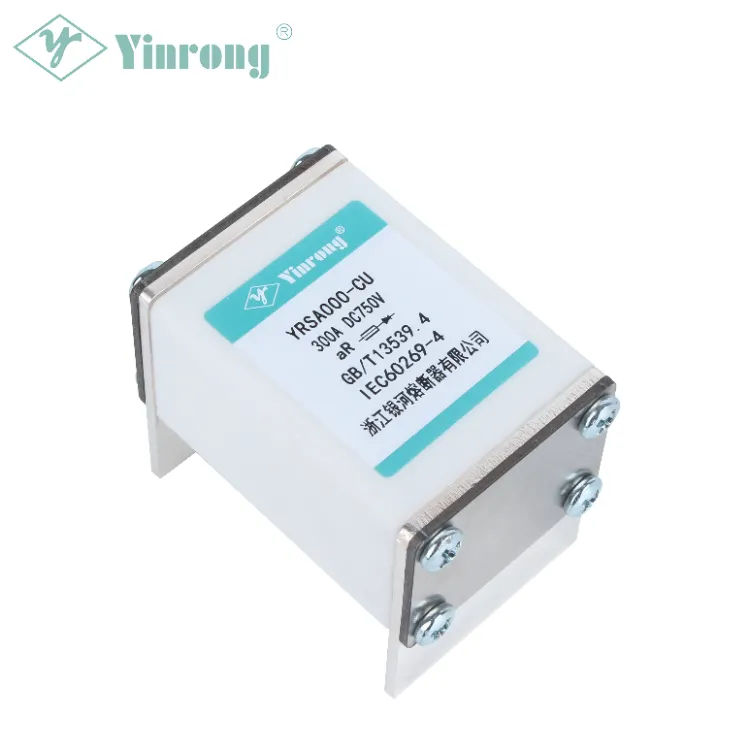
2. Galaxy Fuse YRSA Series aR-Class High-Speed Fuse: Features pure silver or silver-plated copper strip elements that precisely limit let-through I²t. Taking the YRSA000-CU series as an example, aR-class fuses offer extremely low I²t and strong current-limiting capability – absorbing the vast majority of fault heat at the moment of short circuit. The heat passing through the contactor is minimal, contacts remain intact without welding – achieving the coordination effect of "sacrifice the fuse, save the contactor" .
Combined with Galaxy Fuse's proprietary arc-quenching technology – high-purity quartz sand with specialized arc-suppression treatment – arcs are rapidly extinguished at the moment of short circuit, with no housing rupture or sand leakage, preventing secondary arc damage to contactor terminals.
III. Voltage & Current Level Matching: Unified Platform, Coordinated Derating
The foundation of coordination is that both components operate on the same hardware parameter baseline – not one high-voltage and one low-voltage, not one high-current-rated and one low-current-rated.
1. Voltage Unification
The rated DC voltage of both contactor and fuse must be perfectly matched, with a 1.2–1.3× safety margin above the bus voltage:
●750V Standard Charging Station: Contactor 1000VDC + Galaxy Fuse YRSA000-CU Series 750/1000VDC
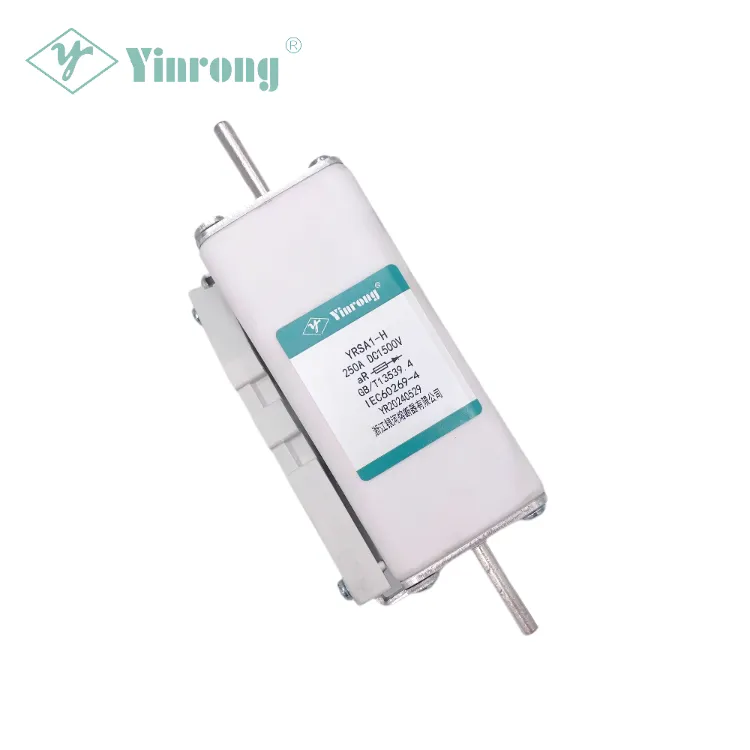
●800V High-Voltage Ultra-Fast Charging / Megawatt Storage: Contactor 1500VDC + Galaxy Fuse YRSA1-HK Series 1500VDC or YRSA7-PK Series 1500VDC
Galaxy Fuse products comply with IEC60269-4, GB/T13539.4, and other international standards, with multiple series holding UL, TUV, and CE certifications. High insulation strength ensures perfect compatibility with high-voltage contactors.
2. Current Layering
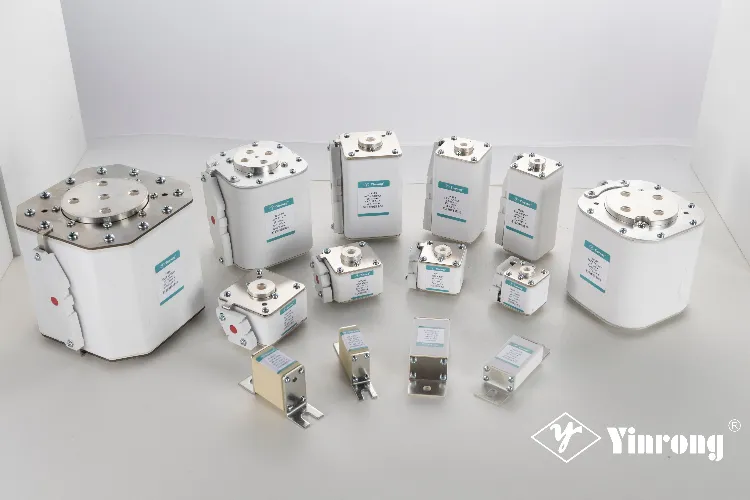
Fuse rated current should always be one step higher than the contactor, creating a "safety buffer zone" – full-load and surge conditions do not interfere with each other. Galaxy Fuse YRSA series covers the full voltage range from 32VDC to 1500VDC, with interrupting capacity up to DC250kA. When matched with high-current contactors, long-term full-load temperature rise is extremely low – eliminating terminal heating and arcing at the source, reducing chronic failures.
3. Coordinated Environmental Derating
In high-temperature enclosures or high-altitude environments, both contactor and fuse must be derated simultaneously – never derate just one component alone, as this would break the coordination balance.
IV. Galaxy Fuse – Fuse Solutions Engineered for Contactor Coordination
Founded in 1980, Galaxy Fuse (Yinrong) is a professional fuse manufacturer integrating R&D, testing, manufacturing, and sales. The company produces full-series new energy fuses for PV, energy storage, and charging station applications, with products exported to over 80 countries and regions worldwide.
1. Material-Level Coordination
Proprietary silver-plated copper strip elements offer surge resistance and metal fatigue resistance – adapting to contactor operation of tens of thousands of switching cycles per day without nuisance tripping. Products comply with IEC60269-4, GB/T13539.4, and other standards, with stable insulation and perfect terminal matching – eliminating heating risks.
2. Process-Optimized Arc Quenching
Advanced technologies including parallel-element arc quenching, fast-break fault interruption, and ceramic tube anti-cracking ensure rapid arc extinction under short-circuit conditions – preventing arc damage to contactor contacts and terminals.
3. Full-Series Voltage & Current Layered Matching
●YRSA000-CU Series: Designed for 750V/1000V standard chargers and small-to-medium energy storage
●YRSA1-HK Series: Designed for 1000V–1500V systems
●YRSA7-PK Series: 1500V square body series, designed for 800V high-voltage ultra-fast charging and large-scale energy storage – interrupting capacity up to DC250kA
Compatible with all standard high-voltage DC contactors available on the market.
4. One-Stop Coordinated Selection Service
Galaxy Fuse provides professional technical support – from I²t matching calculations to complete system protection solutions. Our technical team can assist customers in precisely calculating the full set of matching parameters for contactor and fuse coordination.
Compared to international leading brands, Galaxy Fuse offers significant cost-performance advantages at the same specifications and certifications. Leveraging over 40 years of fuse manufacturing expertise, 48+ patents, and multiple international certifications (UL/TUV/CE/CQC), Galaxy Fuse demonstrates clear advantages in materials, arc-quenching processes, and system coordination capability.
Final Thoughts
The coordination between DC contactor and fuse is fundamentally about precision matching across three dimensions: timing, energy, and parameters. Get the timing right – faults are handled at the right layer. Get the I²t right – heat is distributed appropriately. Get the voltage and current right – hardware components don't compromise each other.
All three are indispensable. Choose correctly – contactor and fuse each play their part, building layers of protection. Choose incorrectly – at best protection fails, at worst equipment is destroyed.
Galaxy Fuse – over 40 years of commitment to high-quality fuses, dedicated to providing safe and reliable circuit protection solutions for charging stations and energy storage systems.
For technical support on fuse selection or contactor coordination, please contact the Galaxy Fuse technical team.