- English
- Español
- Português
- русский
- Français
- 日本語
- Deutsch
- tiếng Việt
- Italiano
- Nederlands
- ภาษาไทย
- Polski
- 한국어
- Svenska
- magyar
- Malay
- বাংলা ভাষার
- Dansk
- Suomi
- हिन्दी
- Pilipino
- Türkçe
- Gaeilge
- العربية
- Indonesia
- Norsk
- تمل
- český
- ελληνικά
- український
- Javanese
- فارسی
- தமிழ்
- తెలుగు
- नेपाली
- Burmese
- български
- ລາວ
- Latine
- Қазақша
- Euskal
- Azərbaycan
- Slovenský jazyk
- Македонски
- Lietuvos
- Eesti Keel
- Română
- Slovenski
- मराठी
- Srpski језик
- שפה עברית
- беларускі
- Bosanski
- ქართული
- O'zbek

Which EV Fuse Keeps High-Voltage EV Systems Safe?
Article Summary
Electric vehicles, charging piles, battery packs, and EVSE systems all depend on fast and reliable circuit protection. A properly selected EV Fuse does more than interrupt current; it helps prevent cable damage, battery failure, equipment downtime, and safety risks caused by overloads or short circuits. This article explains how to choose an EV Fuse by looking at voltage rating, current rating, breaking capacity, operating temperature, installation space, time-current behavior, and real application conditions. It is written for engineers, buyers, installers, and project managers who need practical guidance before sourcing EV protection components.
Table of Contents
Article Outline
This guide begins with the real risks behind incorrect fuse selection, then explains the role of an EV Fuse in electric vehicle and EVSE protection. After that, it breaks down the main selection factors, including voltage, current, fault interruption capacity, temperature, size, and coordination with other components. A practical checklist is included for quick comparison. The article also highlights common purchasing mistakes and explains why working with an experienced manufacturer such as Zhejiang Galaxy Fuse Co., Ltd. can help buyers reduce technical uncertainty before mass procurement.
Why does EV fuse selection matter so much?
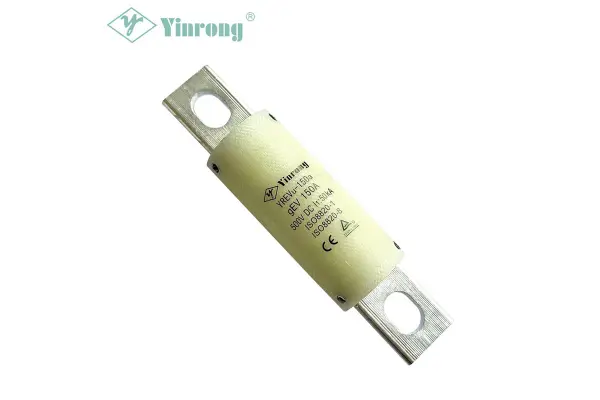
In an electric vehicle or charging system, current does not forgive guesswork. A small mismatch in protection design can lead to repeated nuisance blowing, overheated cables, damaged battery modules, failed chargers, or dangerous fault conditions that are difficult to control once they begin.
Many buyers only ask one simple question at the beginning: “What amp rating do I need?” That question is important, but it is not enough. An EV Fuse must match the full electrical environment. The rated current, rated voltage, breaking capacity, mounting method, temperature condition, pulse load, and circuit position all affect whether the fuse can operate correctly.
EV systems often run on high-voltage DC platforms. Compared with ordinary low-voltage circuits, high-voltage DC faults are more difficult to interrupt because DC current does not naturally pass through zero like AC current. This means the fuse must be designed to break the fault safely and extinguish the arc quickly. A fuse that looks acceptable by current rating alone may still be unsuitable if its voltage rating or interrupting capacity is too low.
For fleet operators, charger manufacturers, battery pack designers, and EVSE integrators, the cost of a wrong fuse is not limited to the component itself. The real cost appears in field failures, warranty claims, project delays, safety inspections, and customer complaints. Choosing the correct EV Fuse early in the design stage is one of the most practical ways to protect both equipment and reputation.
What does an EV Fuse actually protect?
An EV Fuse is designed to interrupt excessive current before that current damages critical parts of the system. In EV and EVSE applications, protection targets may include battery packs, DC charging circuits, power distribution units, onboard chargers, auxiliary circuits, inverters, and charging station modules.
When a short circuit or overload occurs, current can rise extremely fast. The fuse element melts under controlled conditions, opening the circuit and stopping the fault from spreading. A suitable EV Fuse helps limit thermal stress, reduce arc risk, and protect expensive downstream components.
Different EV circuits may need different fuse types. A battery protection circuit may need high breaking capacity and fast response. A charging circuit may need stable operation under continuous current and occasional current fluctuations. An auxiliary circuit may require compact size and accurate protection for smaller loads. This is why fuse selection should always follow application conditions instead of a one-size-fits-all rule.
Zhejiang Galaxy Fuse Co., Ltd. provides EV automotive and EVSE fuse options for high-voltage new energy applications, supporting buyers who need dedicated protection products for electric vehicles, charging equipment, and related power systems.
How should buyers choose the right EV Fuse?
The safest approach is to review the application step by step. A buyer should not start by comparing prices. The first step is to understand the actual circuit. Where will the fuse be installed? What is the normal operating current? What is the maximum voltage? What fault current could appear? What temperature will the fuse face in real operation? How often will current peaks occur?
The rated voltage of the EV Fuse should be equal to or higher than the maximum system voltage. For DC applications, using a fuse with insufficient voltage rating can create serious interruption problems. The fuse may melt, but it may not safely clear the arc. In high-voltage EV systems, this is not a small technical detail; it is a core safety requirement.
The rated current should be selected according to continuous load, expected current fluctuation, ambient temperature, and derating requirements. A fuse rated too close to the normal working current may blow repeatedly during normal operation. A fuse rated too high may fail to protect cables and components quickly enough during an abnormal condition.
Breaking capacity is another key factor. This value tells you the maximum fault current that the fuse can interrupt safely. EV battery systems and charging stations may generate very high fault currents, so the selected EV Fuse must be able to handle the worst-case scenario, not only the average operating condition.
Time-current characteristics should also be reviewed carefully. Some circuits need fast-acting protection to protect sensitive electronics. Others may need to tolerate short inrush currents without unnecessary operation. The right curve depends on the protected equipment and the expected current profile.
Physical size and installation method matter as well. A fuse must fit the holder, busbar layout, cabinet structure, or battery pack design. Poor installation can increase contact resistance, create heat, and reduce long-term reliability. For buyers sourcing in volume, dimensions, mounting consistency, and product availability are just as important as electrical ratings.
Practical buying tip:
Before requesting a quotation, prepare the system voltage, normal current, maximum current, possible fault current, installation space, working temperature, and application type. This allows the supplier to recommend an EV Fuse more accurately and reduces back-and-forth communication.
EV Fuse selection checklist
| Selection Factor | What to Check | Why It Matters |
|---|---|---|
| Rated Voltage | Confirm the maximum DC voltage of the EV, battery, or EVSE system. | The fuse must safely interrupt current under the system voltage. |
| Rated Current | Check normal continuous current and possible operating fluctuations. | A poor match may cause nuisance blowing or weak protection. |
| Breaking Capacity | Estimate the highest possible short-circuit current. | The fuse must clear severe faults without rupture or unsafe arcing. |
| Time-Current Curve | Compare fuse response with equipment tolerance and inrush current. | The fuse should react fast during faults but stay stable during normal peaks. |
| Temperature Condition | Review cabinet, battery pack, or charger operating temperature. | Heat affects current-carrying performance and service life. |
| Installation Space | Check dimensions, holder type, and connection method. | Correct fit helps avoid poor contact, overheating, and assembly issues. |
| Application Position | Identify whether the fuse protects battery, charger, inverter, or auxiliary circuit. | Different positions require different protection behavior. |
This checklist can help purchasing teams avoid the common habit of choosing by amp rating alone. A reliable EV Fuse is selected through the full circuit condition, not through a single number printed on the product.
Common mistakes when choosing EV fuses
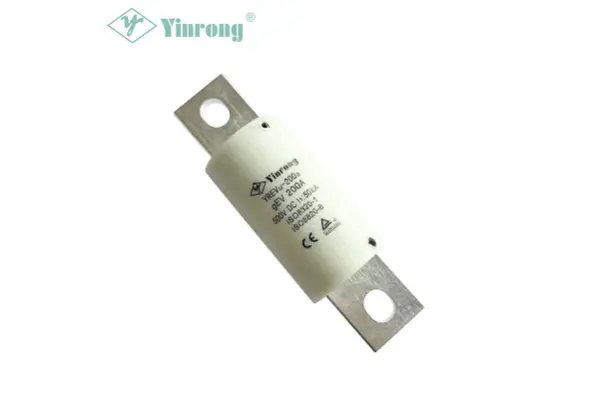
One common mistake is selecting a fuse only because it matches the current rating. For example, a circuit with a normal working current close to the fuse rating may experience repeated fuse operation even when no real fault exists. This causes downtime and may lead technicians to replace the fuse with a larger one without checking the root cause.
Another mistake is ignoring voltage rating. A fuse with a suitable amp rating but insufficient DC voltage capability may not be able to interrupt the circuit safely during a high-voltage fault. In EV applications, voltage rating is not optional. It must be checked at the beginning.
Some buyers also overlook breaking capacity. The fuse may work during small overloads, but if a serious short-circuit condition occurs, low interrupting capacity can become a major hazard. For EV battery and charging systems, fault current calculation should be part of the selection process.
Temperature is often underestimated. EV chargers, power cabinets, and battery compartments can operate in demanding environments. If the actual ambient temperature is high, the fuse may need derating. Without considering temperature, the selected EV Fuse may age faster or operate earlier than expected.
The final mistake is choosing a supplier only by unit price. A low-cost fuse that lacks stable performance, clear specifications, or consistent production quality can create much higher costs later. For projects involving EV charging infrastructure, new energy vehicles, and energy storage systems, buyers should evaluate technical support, product range, manufacturing experience, and response speed.
- Do not choose by current rating alone.
- Do not use a fuse with a lower voltage rating than the system requires.
- Do not ignore short-circuit current and breaking capacity.
- Do not forget temperature derating in enclosed or high-heat locations.
- Do not replace repeated blown fuses with larger ratings without checking the circuit.
- Do not treat EV protection components as ordinary low-risk accessories.
Why supplier capability matters
A good fuse supplier should do more than ship products from a catalog. In EV applications, buyers often need support with model selection, rating confirmation, drawing checks, sample testing, and batch consistency. When project requirements involve high-voltage DC protection, technical communication becomes part of product value.
Zhejiang Galaxy Fuse Co., Ltd. focuses on fuse products for new energy and electrical protection applications, including EV automotive and EVSE fuse solutions. For buyers, this means they can discuss application requirements with a manufacturer that understands the importance of current interruption, DC voltage protection, and product matching for EV-related systems.
When evaluating an EV Fuse supplier, buyers should ask practical questions. Can the supplier provide suitable voltage and current options? Can they support different EV and EVSE applications? Are product specifications clear? Is the company experienced with new energy protection? Can they respond when a project has special requirements?
These questions are especially important for OEMs, charging station builders, battery system companies, and distributors who serve technical customers. The right supplier helps reduce selection risk, shorten purchasing time, and improve confidence before production or installation.
FAQ
What is an EV Fuse?
An EV Fuse is a protective fuse designed for electric vehicle, battery, charging, and EVSE circuits. It interrupts excessive current to help protect cables, battery modules, chargers, and other electrical components.
Can I choose an EV Fuse only by amp rating?
No. Amp rating is only one part of the selection. You also need to check DC voltage rating, breaking capacity, time-current behavior, temperature condition, installation space, and the protected circuit.
Why is DC voltage rating important for EV fuses?
EV systems commonly use high-voltage DC circuits. A fuse must be able to interrupt current safely at the system voltage. If the voltage rating is too low, the fuse may not clear the fault safely.
Why does my EV Fuse keep blowing?
Repeated fuse operation may be caused by overload, short circuit, incorrect fuse rating, high ambient temperature, current peaks, poor contact, or an unsuitable time-current curve. The circuit should be checked before simply replacing the fuse with a larger rating.
Where are EV fuses commonly used?
EV fuses are commonly used in electric vehicles, EV charging piles, EVSE equipment, battery packs, power distribution units, onboard chargers, and related high-voltage DC protection circuits.
How can I request the right EV Fuse model?
Prepare your system voltage, working current, maximum current, possible fault current, application position, installation size, and working temperature. With these details, a supplier can recommend a more suitable product.
Final thoughts
The right EV Fuse is not chosen by guesswork. It is selected through a clear understanding of voltage, current, fault conditions, temperature, installation structure, and application purpose. For electric vehicles and EVSE systems, this small component carries a serious responsibility: it must stay stable during normal operation and act quickly when a dangerous fault appears.
For buyers, the best decision is to treat fuse selection as part of system safety design, not as a last-minute purchasing task. A reliable EV Fuse helps reduce downtime, protect expensive equipment, and improve long-term confidence in EV and charging projects.
If you are looking for EV automotive or EVSE fuse solutions for your next project, Zhejiang Galaxy Fuse Co., Ltd. can support your selection with practical product options and application-focused guidance. For model recommendations, technical communication, or bulk purchasing needs, please contact us today and share your project requirements with our team.