- English
- Español
- Português
- русский
- Français
- 日本語
- Deutsch
- tiếng Việt
- Italiano
- Nederlands
- ภาษาไทย
- Polski
- 한국어
- Svenska
- magyar
- Malay
- বাংলা ভাষার
- Dansk
- Suomi
- हिन्दी
- Pilipino
- Türkçe
- Gaeilge
- العربية
- Indonesia
- Norsk
- تمل
- český
- ελληνικά
- український
- Javanese
- فارسی
- தமிழ்
- తెలుగు
- नेपाली
- Burmese
- български
- ລາວ
- Latine
- Қазақша
- Euskal
- Azərbaycan
- Slovenský jazyk
- Македонски
- Lietuvos
- Eesti Keel
- Română
- Slovenski
- मराठी
- Srpski језик
- שפה עברית
- беларускі
- Bosanski
- ქართული
- O'zbek

Why Does Solar Power Protection PV Fuse Matter So Much in Modern PV Systems?
Abstract
In photovoltaic systems, protection is rarely the first thing buyers get excited about, yet it is often the reason a system keeps running safely when conditions turn unpredictable. A well-matched Solar Power Protection PV Fuse helps isolate overcurrent events, reduce the spread of electrical faults, protect sensitive equipment, and limit costly downtime across combiner boxes, string circuits, and other DC-side installations. For buyers, EPCs, and maintenance teams, the real challenge is not simply finding a fuse that fits on paper, but choosing one that performs reliably under temperature shifts, load variation, and long operating cycles. This article explains how to evaluate PV fuse protection in practical terms, what mistakes commonly lead to premature replacement or inadequate protection, and how manufacturers such as Zhejiang Galaxy Fuse Co., Ltd. fit into a more dependable sourcing decision.
Table of Contents
- Outline
- What Problems Does a Solar Power Protection PV Fuse Actually Solve?
- How Does a PV Fuse Work Differently from General-Purpose Protection?
- Which Buying Mistakes Cause the Most Trouble in Real Projects?
- What Should Buyers Check Before Choosing a PV Fuse?
- How Can a Better Fuse Choice Reduce Long-Term Cost?
- What Makes a Supplier More Worth Trusting?
- FAQ
- Conclusion
Outline
- The role of overcurrent protection in photovoltaic systems
- How PV fuse behavior differs from standard fuse applications
- Common specification and purchasing errors
- Selection criteria for current, voltage, environment, and installation
- Cost, reliability, and maintenance impact over time
- How to judge whether a supplier can support real project needs
What Problems Does a Solar Power Protection PV Fuse Actually Solve?
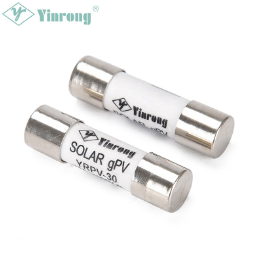
When people talk about solar system performance, they usually jump to module efficiency, inverter quality, or mounting design. Protection components often stay in the background until something goes wrong. That is exactly why the Solar Power Protection PV Fuse deserves more attention. Its job is simple in theory but critical in practice: it interrupts dangerous overcurrent before damage spreads through the DC side of the system.
Photovoltaic arrays operate under conditions that are more demanding than many buyers expect. Current paths are exposed to weather, temperature swings, dust, connection aging, and unpredictable field conditions. A fault in one string can place stress on neighboring strings. A poorly coordinated protection strategy can allow heat buildup, connector damage, cable deterioration, or secondary component failure. In these situations, a Solar Power Protection PV Fuse acts as a controlled weak point, sacrificing itself so the larger system does not suffer a more expensive or dangerous failure.
For a buyer, the pain point is rarely “Do I need protection?” The real pain point is “How do I avoid nuisance failures without under-protecting the system?” That is where thoughtful product selection matters. An underspecified fuse can open too late. An oversized fuse can fail to protect the equipment it was supposed to defend. A cheap fuse with poor consistency can create service headaches long after procurement is complete.
In short, a PV fuse solves three buyer concerns at once: system safety, equipment survival, and maintenance predictability. That combination makes it a purchasing decision with consequences far beyond its unit price.
How Does a PV Fuse Work Differently from General-Purpose Protection?
Not every fuse is suitable for photovoltaic applications. This is one of the most common misunderstandings in sourcing. A general industrial fuse may appear acceptable based on current rating alone, yet still perform poorly in a solar installation because PV circuits have their own operating behavior, especially on the DC side.
Alternating current naturally crosses zero, which helps interrupt an arc. Direct current does not offer that same advantage. In PV systems, the fuse must be capable of clearing fault current reliably without depending on AC zero crossing behavior. That means the design, materials, and interruption capability of a Solar Power Protection PV Fuse must align with the realities of photovoltaic operation.
There is also the issue of long-duration exposure. Solar systems are built for extended service lives, and components on the DC side are expected to operate steadily for years under outdoor stress. A fuse in this setting is not just a protective part; it is part of the reliability chain. If it degrades too quickly in heat, responds inconsistently under repeated thermal cycling, or becomes difficult to replace in the field, the entire system feels that weakness.
| Comparison Point | General-Purpose Fuse | Solar Power Protection PV Fuse |
|---|---|---|
| Typical Circuit Type | Often broader industrial use | Designed for photovoltaic DC protection |
| Arc Interruption Demands | May not be optimized for PV DC faults | Built to manage DC-side interruption needs |
| Application Stability | Varies by environment | Tailored for long-term solar use conditions |
| Selection Logic | Often current-focused only | Requires voltage, current, installation, and system coordination |
That difference matters because the wrong substitution may not fail immediately. It may pass inspection, survive startup, and still become the hidden reason behind poor field reliability later.
Which Buying Mistakes Cause the Most Trouble in Real Projects?
Buyers do not usually struggle because the market lacks options. They struggle because too many options look similar at first glance. In real purchasing situations, several mistakes appear again and again:
- Choosing only by price: A low unit cost can look attractive in a spreadsheet, but if the fuse causes inconsistent field behavior or earlier replacement cycles, total ownership cost rises quickly.
- Matching only nominal current: A fuse should not be selected on one rating line alone. System behavior, environmental conditions, and coordination requirements all matter.
- Ignoring installation environment: Outdoor heat, enclosure conditions, dust, humidity, and thermal cycling all affect long-term performance.
- Overlooking replacement convenience: A hard-to-service design becomes a maintenance burden in large projects.
- Assuming all “PV fuses” are equal: Labels can sound similar while manufacturing consistency, testing discipline, and practical support differ widely.
Another common issue is fragmented procurement. One team purchases the fuse, another team approves system design, and a third team handles maintenance planning. If these decisions are not aligned, the chosen protection device may satisfy the purchasing checklist without actually satisfying field use expectations.
That is why experienced buyers increasingly want more than a catalogue. They want a supplier that can support specification clarity, application understanding, and product continuity over time.
What Should Buyers Check Before Choosing a PV Fuse?
A better sourcing decision starts with better questions. Before placing an order for a Solar Power Protection PV Fuse, buyers should review the application from both the electrical side and the operational side.
Key checkpoints include:
-
System voltage compatibility
The fuse must be appropriate for the DC voltage level of the target photovoltaic system. This is not a detail to gloss over, because interruption behavior depends heavily on it. -
Current range and coordination
The fuse should align with expected operating current as well as possible abnormal conditions. Proper coordination helps avoid both under-protection and unnecessary opening. -
Installation location
Is the fuse going into a combiner box, string protection position, or another DC-side assembly? Location affects thermal conditions, replacement access, and performance expectations. -
Ambient temperature and enclosure conditions
Heat is not a side note in solar projects. It is part of daily reality. A fuse that looks fine on paper may behave differently under sustained elevated temperature. -
Mechanical compatibility
Dimensions, holder matching, assembly space, and maintenance ergonomics matter more than buyers sometimes expect, especially when scaling installations. -
Supplier support consistency
Can the supplier respond to technical questions clearly? Can they support stable supply across repeat orders? Can they maintain product consistency from batch to batch?
A useful way to think about selection is to stop asking only “Will this fuse work?” and start asking “Will this fuse still be the right choice after years of real operation, service, and replacement?” That second question leads to better procurement outcomes.
| Buyer Concern | Why It Matters | What to Confirm |
|---|---|---|
| Electrical Fit | Prevents mismatch and unreliable protection | Voltage and current suitability for the target PV circuit |
| Environmental Durability | Supports long-term outdoor operation | Heat tolerance, enclosure conditions, and service expectations |
| Maintenance Efficiency | Reduces downtime and labor complexity | Replacement access, holder fit, and standardization |
| Supply Stability | Supports repeat purchasing and project continuity | Manufacturer responsiveness, product continuity, and production consistency |
How Can a Better Fuse Choice Reduce Long-Term Cost?
Procurement teams are often pressured to cut visible costs quickly. The problem is that protection devices are evaluated too narrowly when cost is viewed only at the purchase stage. The unit price of a Solar Power Protection PV Fuse may be small, but the consequences of poor selection can be expensive in ways that do not show up on the first invoice.
A more suitable fuse can reduce service calls, shorten troubleshooting time, prevent unnecessary replacement of neighboring components, and improve operational confidence. In utility-scale and commercial projects, even brief interruptions can create a chain of avoidable losses. Technicians spend time diagnosing faults. Spare parts inventories become harder to manage. Site owners become less confident in the system. All of this comes from a component that was originally treated as simple.
A strong purchasing decision therefore considers:
- Replacement frequency over the life of the installation
- Likelihood of false economy from overly cheap sourcing
- Downtime risk and service labor cost
- System protection coordination across multiple components
- Long-term ease of repeat procurement
When viewed this way, the right fuse is not just a protective item. It is a quiet reliability investment. That is exactly the kind of purchase that keeps a project stable after the handover stage, when the sales promises are over and the equipment has to perform for real.
What Makes a Supplier More Worth Trusting?
Many buyers are not only choosing a product; they are choosing whether a supplier will make their work easier or harder over time. That is why sourcing from an established manufacturer can matter. Buyers want technical clarity, communication that does not waste project time, and confidence that future orders will not drift in quality or specification.
Zhejiang Galaxy Fuse Co., Ltd. appears in this conversation because buyers searching for photovoltaic protection often want manufacturers that focus on fuse products rather than treating them as an afterthought. In that kind of sourcing environment, buyers are usually looking for several signals at once: category specialization, a product range that covers evolving application needs, responsiveness during specification review, and a practical understanding of where PV protection fits inside broader project reliability.
A trustworthy supplier is not necessarily the one with the most dramatic marketing language. It is the one that can answer ordinary but important questions well:
- Can they explain product fit without vague language?
- Can they support repeat orders with stable quality?
- Can they communicate clearly with EPCs, distributors, and industrial buyers?
- Can they help reduce uncertainty during selection rather than increase it?
That kind of supplier relationship matters because protection selection is not always settled by catalogue browsing alone. Real buyers often need confidence before they commit. When the application is part of a long-term solar investment, confidence becomes part of the value.
FAQ
What is the main function of a Solar Power Protection PV Fuse?
Its main function is to interrupt dangerous overcurrent in photovoltaic DC circuits so that cables, modules, and associated equipment are less likely to suffer wider damage during a fault.
Is a general fuse enough for a PV application?
Not always. Photovoltaic systems have DC-side operating characteristics that require more specific protection behavior. A fuse that seems acceptable in a general application may not be the best choice for a solar installation.
Why do buyers sometimes face repeated fuse replacement problems?
This often happens when the original selection focused too narrowly on basic rating values without enough attention to environmental stress, coordination, installation conditions, or product consistency.
Does a higher-priced PV fuse automatically mean better performance?
No. Price alone is not proof of suitability. The better question is whether the fuse matches the application, performs consistently, and helps reduce service and downtime costs over time.
How should I compare PV fuse suppliers?
Compare them by product focus, technical communication, range relevance, consistency across orders, and how clearly they can support your application requirements before purchase.
Conclusion
A Solar Power Protection PV Fuse may be small compared with modules, inverters, or mounting structures, but its influence on safety and continuity is far from small. For project owners, distributors, EPC buyers, and maintenance teams, the smarter decision is not to treat PV fuse selection as a routine checkbox. It should be treated as part of system reliability planning.
When you evaluate fuse protection through the lens of real operating conditions, replacement efficiency, and long-term sourcing stability, the buying decision becomes much clearer. If you are reviewing options for photovoltaic DC protection and want support from a manufacturer that understands this product category, Zhejiang Galaxy Fuse Co., Ltd. is worth including in your consideration. To discuss application needs, product matching, or sourcing questions for your next PV project, contact us and start the conversation with a team that takes protection seriously.