- English
- Español
- Português
- русский
- Français
- 日本語
- Deutsch
- tiếng Việt
- Italiano
- Nederlands
- ภาษาไทย
- Polski
- 한국어
- Svenska
- magyar
- Malay
- বাংলা ভাষার
- Dansk
- Suomi
- हिन्दी
- Pilipino
- Türkçe
- Gaeilge
- العربية
- Indonesia
- Norsk
- تمل
- český
- ελληνικά
- український
- Javanese
- فارسی
- தமிழ்
- తెలుగు
- नेपाली
- Burmese
- български
- ລາວ
- Latine
- Қазақша
- Euskal
- Azərbaycan
- Slovenský jazyk
- Македонски
- Lietuvos
- Eesti Keel
- Română
- Slovenski
- मराठी
- Srpski језик
- שפה עברית
- беларускі
- Bosanski
- ქართული
- O'zbek

Fuse Selection: Core Steps and Key Considerations
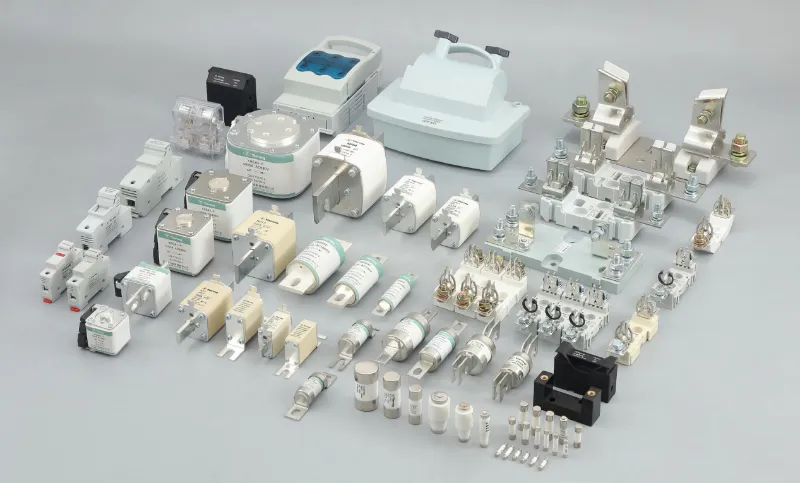
Fuses are widely recognized in electrical systems as the last line of defense against overcurrent faults — their correct selection directly determines fault interruption capability and equipment safety margins. Improper selection not only leads to frequent equipment power outages but may also cause serious accidents such as fires and explosion. However, faced with multiple complex parameters such as voltage rating, current characteristic curves, breaking capacity, and temperature derating, many engineers and procurement personnel often find themselves unsure where to start. As a professional supplier of circuit protection components, Galaxy Fuse has been deeply engaged in the fuse and power distribution protection field for many years, offering a full range of fuse products including gL/gG slow-clear type, fast-acting type, and DC-specific type, helping customers achieve safe, precise, and reliable overload and short-circuit protection. This article, combining international selection standards with practical experience, systematically outlines the core steps and key considerations for fuse selection, assisting you in making correct decisions from dimensions such as voltage, current, characteristic curves, and breaking capacity, and providing a clear, actionable selection guide.
1. Determine the Voltage Rating:
The rated voltage of the fuse must be equal to or greater than the maximum operating voltage of the protected circuit (including possible transient overvoltages). For DC circuits, special attention is required to select fuses specifically designed for DC, because interrupting a DC arc is much more difficult than interrupting an AC arc.
2.Determine the Current Rating (Most Critical and Complex)
Normal Operating Current:
Accurately measure or calculate the continuous current drawn by the circuit under normal operating conditions. The rated current of the fuse must be greater than the normal operating current of the circuit and must be less than the safe current-carrying capacity of the protected conductor or components.
3. Key Considerations for Selecting the Rated Current
(1) Fuse Characteristic Curve
Consult the manufacturer's time-current characteristic curve.
Ensure that under normal operating current, the fuse does not clear (i.e., tthe fuse operating time is longer than the normal operating current point).
Under overload or short-circuit currents that require protection, the fuse must safely clear within a sufficiently short time (i.e., the curve lies to the left of the overload/short-circuit point).
(2) Overload Protection
For equipment with inrush current during startup, such as motors and transformers, the fuse must withstand the startup (surge) current without clearing within the allowable starting time (select a fuse with sufficient I²t value).
At the same time, when an overload occurs (e.g., 1.5 to 6 times the rated current), the fuse should clear within the equipment's allowable overload time. Select slow-clear or time-delay fuses (e.g., gL/gG, Type T).
(3) Short-Circuit Protection
The fuse must interrupt very large short-circuit currents within an extremely short time (typically milliseconds) to prevent equipment damage and fire. Sufficient breaking capacity is required (see next section).
(4) Temperature Derating
The current rating of a fuse decreases under high ambient temperatures. Consult the datasheet and perform derating calculations based on the maximum actual installation environment temperature. For example, at an ambient temperature of 55°C, it may be necessary to select a fuse with a rated current 50% or more higher than the normal operating current. Avoid installing fuses in enclosed high-temperature spaces or near heat-generating components.
(5) Surge Currents and Aging
Frequent starting pulses or sustained slight overloads can accelerate fuse aging, causing it to clear even under normal operating current. Evaluate the current fluctuations in actual operation.
4. Determine the Breaking Capacity (Interrupting Rating)
The rated breaking capacity of the fuse must be greater than or equal to the maximum expected fault current that may occur in the protected circuit (typically the short-circuit current at the installation point). For the efinal circuits or household circuits, the breaking capacity may be required to be several thousand amperes (e.g., 6 kA). For industrial main distribution boards located close to large transformers, the breaking capacity may need to be tens or even hundreds of kiloamperes (e.g., 50 kA, 100 kA, or higher). Selecting a fuse with insufficient breaking capacity can cause the fuse to rupture or fail to reliably extinguish the arc when interrupting a large fault current, leading to serious accidents.
Critical Safety Warnings
No Substitutions:
Never use a fuse with a current rating higher than specified, or replace a fuse with a wire (copper or iron). This is a serious fire hazard.
Caution with DC:
In DC systems, always use fuses that are clearly marked with a DC rating and have adequate voltage rating. AC fuses may not safely interrupt DC fault currents.
Danger of Insufficient Breaking Capacity:
A fuse with insufficient breaking capacity can explode when interrupting a large short-circuit current, producing an arc and flying debris – extremely dangerous.
Replacement Rule:
After a fuse clears, always identify and eliminate the cause of the fault, then replace it with a fuse of the same type and same ratings.
Fuse selection is by no means as simple as "just pick a larger rating" — it requires comprehensive consideration of multiple variables such as voltage, current, ambient temperature, inrush current, and short-circuit energy. An incorrect selection can render the protection device ineffective, or even become the source of an accident. Galaxy Fuse offers a full range of fuse products from 1A to 2000A, covering AC 250V/500V/690V and DC 150V/500V/1000V, including gG/gL general-purpose fuses, aM motor protection fuses, fast-acting semiconductor protection fuses, and PV/energy storage DC-specific fuses. We also provide complete time-current curves and I²t selection data support. Our technical team can assist you with in-depth selection services such as derating calculations, breaking capacity verification, and aging life assessment.
Selecting fuses for a project? Still unsure about DC protection or high short-circuit current scenarios?
Feel free to contact the Galaxy Fuse team anytime, or leave a message below. Simply provide us with your operating voltage, normal load current, inrush peak current, and ambient temperature, and we will recommend the safest and most economical fuse model for you.