- English
- Español
- Português
- русский
- Français
- 日本語
- Deutsch
- tiếng Việt
- Italiano
- Nederlands
- ภาษาไทย
- Polski
- 한국어
- Svenska
- magyar
- Malay
- বাংলা ভাষার
- Dansk
- Suomi
- हिन्दी
- Pilipino
- Türkçe
- Gaeilge
- العربية
- Indonesia
- Norsk
- تمل
- český
- ελληνικά
- український
- Javanese
- فارسی
- தமிழ்
- తెలుగు
- नेपाली
- Burmese
- български
- ລາວ
- Latine
- Қазақша
- Euskal
- Azərbaycan
- Slovenský jazyk
- Македонски
- Lietuvos
- Eesti Keel
- Română
- Slovenski
- मराठी
- Srpski језик
- שפה עברית
- беларускі
- Bosanski
- ქართული
- O'zbek

Which ESS and Semiconductor High Speed Fuse Fits High Power Protection Needs?
Article Summary
Selecting an ESS and Semiconductor High Speed Fuse is not only about matching voltage and current ratings. Buyers also need to consider fault interruption speed, temperature rise, I²t performance, installation style, cooling conditions, and the actual protection target inside the system. In energy storage systems, power converters, rectifiers, battery cabinets, inverter controllers, regenerative drives, and semiconductor equipment, the wrong fuse can lead to nuisance operation, overheated terminals, delayed fault clearing, or damage to expensive power components. This article explains how to evaluate high speed fuse options with a practical purchasing mindset, so engineers, panel builders, procurement teams, and system integrators can reduce selection risk before placing an order.
Table of Contents
- Article Outline
- Why High Power Systems Make Fuse Selection Difficult
- What an ESS and Semiconductor High Speed Fuse Does
- Key Factors Buyers Should Check Before Ordering
- Why Temperature Rise Cannot Be Judged Alone
- Comparison Table for Common Selection Scenarios
- Practical Checklist for Procurement and Engineering Teams
- How Zhejiang Galaxy Fuse Co., Ltd. Supports Safer Selection
- FAQ
- Final Advice and Contact Us
Article Outline
- Introduce the real risks behind ESS and semiconductor fuse selection.
- Explain the role of high speed fuses in energy storage and semiconductor protection.
- Break down voltage, current, operating class, I²t, temperature rise, mounting style, and application matching.
- Clarify why a cooler-running fuse is not always the safest fuse.
- Provide a table for common application scenarios.
- Offer a buyer-friendly checklist for engineering review and supplier communication.
- Close with a practical inquiry-driven call to action.
Why High Power Systems Make Fuse Selection Difficult
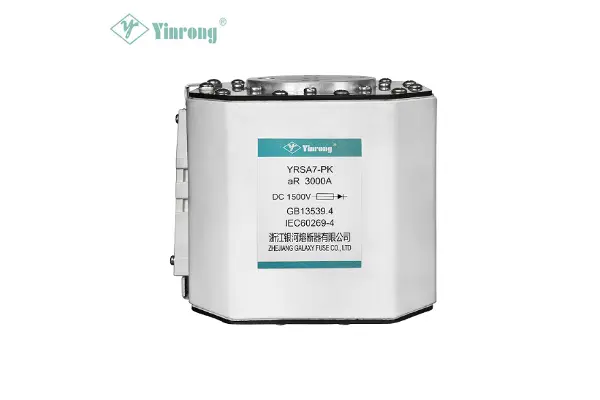
Energy storage and semiconductor systems are not gentle electrical environments. They often involve high available fault current, frequent current cycling, limited cabinet space, rising ambient temperature, and sensitive power electronic devices that cannot survive long fault durations. In these systems, a fuse is not a small accessory added at the end of the design. It is a protection component that must respond quickly enough to limit damage while remaining stable enough to handle normal operating current.
The trouble begins when different teams look at the same fuse from different angles. A procurement manager may focus on price, stock, and delivery. An engineer may focus on rated voltage, ampere rating, breaking capacity, and operating class. A maintenance team may care about replacement convenience and terminal temperature. A system integrator may worry about whether the selected fuse can coordinate with contactors, DC breakers, busbars, and battery management protection logic. All of these concerns are valid, but they can pull the selection process in different directions.
A poorly matched ESS and Semiconductor High Speed Fuse can create hidden risks. If the fuse runs too hot, nearby insulation, terminals, or holders may age faster. If the fuse is selected only for low temperature rise, it may not interrupt a damaging semiconductor fault quickly enough. If the rated voltage is not suitable for the system, arc interruption can become unreliable. If the installation style does not match the cabinet structure, heat dissipation and maintenance both suffer. This is why fuse selection should be treated as a technical purchasing decision, not a simple line-item replacement.
What an ESS and Semiconductor High Speed Fuse Does
An ESS and Semiconductor High Speed Fuse is designed to protect energy storage circuits and power semiconductor devices by interrupting abnormal overcurrent conditions with high current-limiting performance. In practical terms, it helps protect components such as inverters, converters, rectifiers, batteries, capacitors, regenerative drives, frequency converters, and other power conversion equipment.
Unlike general-purpose fuses, high speed fuses are expected to react very quickly under severe fault conditions. In semiconductor protection, even a short delay can allow damaging thermal energy to pass into an IGBT, diode, thyristor, power module, or converter bridge. This is why buyers often pay close attention to I²t values. The lower the let-through energy under fault conditions, the better the fuse can help limit damage to expensive semiconductor components.
However, high speed protection is not only about being “fast.” The fuse must also remain reliable during normal current flow. Energy storage systems may experience charging, discharging, current fluctuation, and thermal cycling. A suitable fuse should withstand normal operating conditions while still clearing faults with the required speed. That balance is the heart of proper selection.
Key Factors Buyers Should Check Before Ordering
Before purchasing an ESS and Semiconductor High Speed Fuse, buyers should avoid choosing only by ampere rating. Current rating is important, but it is only one part of the decision. A fuse that appears suitable on paper may still fail to fit the real operating environment if voltage level, mounting method, thermal behavior, and protection class are not reviewed together.
- Rated voltage: The fuse must match or exceed the system voltage under the correct AC or DC condition. DC applications require special attention because arc interruption is more demanding.
- Rated current: The selected current rating should support continuous operation without unnecessary opening, while still protecting the circuit during abnormal conditions.
- Breaking capacity: The fuse must be able to safely interrupt the available fault current in the system.
- Operating class: Classes such as aR and gR are often used in semiconductor protection. Buyers should confirm whether the application requires short-circuit protection only or a wider protection range.
- I²t value: This helps estimate the energy let through during a fault. Lower let-through energy is often important for sensitive semiconductor components.
- Temperature rise: The fuse should control heat under rated operation, but temperature rise must be balanced with speed and protection performance.
- Mounting type: Square body, stud-mount, bolt-connected, and BS88 style products may fit different cabinet layouts and busbar structures.
- Application environment: Ambient temperature, airflow, enclosure size, busbar cross-section, altitude, vibration, and maintenance access can affect final performance.
A good selection process starts by asking what the fuse must protect first. Protecting a battery string is not exactly the same as protecting a converter input. Protecting a semiconductor module is not the same as protecting a cable. The more clearly the fault scenario is defined, the easier it becomes to choose the correct fuse family.
Why Temperature Rise Cannot Be Judged Alone
Temperature rise is one of the most common concerns in fuse selection. Nobody wants overheated terminals, aged insulation, or a cabinet that becomes difficult to manage thermally. Still, buyers should be careful with one common misunderstanding: the lowest temperature rise is not always the best protection choice.
Heat generation is closely related to resistance and current. Under normal operation, lower resistance can reduce power loss and help the fuse run cooler. That sounds attractive, especially in compact ESS cabinets where every watt of heat matters. But a fuse is not a passive conductor. It must melt and interrupt dangerous current when a fault occurs. If the design focuses only on reducing heat, the fuse may become slower under certain fault conditions. For semiconductor protection, that delay can be costly.
The real goal is controlled thermal behavior with reliable interruption. A high-quality ESS and Semiconductor High Speed Fuse should not overheat during normal operation, but it should also have the correct melting and clearing characteristics under short-circuit conditions. Buyers should review temperature rise together with cold resistance, rated current, I²t data, installation environment, and the expected fault current level.
Cabinet design also matters. Long busbars, small copper cross-sections, loose contact pressure, poor airflow, and high ambient temperatures can all increase heat around the fuse. Sometimes the fuse is blamed for a thermal problem that actually comes from connection design or enclosure layout. For this reason, it is useful to discuss the complete installation condition with the supplier before confirming the model.
Comparison Table for Common Selection Scenarios
| Application Scenario | Main Buyer Concern | Fuse Selection Focus | Practical Notes |
|---|---|---|---|
| Battery energy storage cabinet | High DC fault current, compact cabinet space, heat control | DC voltage rating, breaking capacity, current rating, thermal performance | Check airflow, busbar size, and service access before finalizing the fuse structure. |
| Power converter or inverter | Protection of sensitive semiconductor modules | Low I²t, fast clearing, proper operating class | Coordinate the fuse with semiconductor withstand data and converter protection logic. |
| Rectifier equipment | Stable operation under continuous load and fast fault response | Rated current, heat dissipation, short-circuit performance | Review normal load profile, peak current, and cabinet temperature together. |
| Regenerative drive system | Current fluctuation and equipment protection | Current cycling capability, fuse class, mounting stability | Ask whether the selected fuse can handle the expected duty cycle without nuisance operation. |
| Semiconductor test or industrial power supply | Precise protection and reduced downtime | I²t, response speed, replacement availability | Keep spare parts strategy in mind when choosing special structures or custom ratings. |
Practical Checklist for Procurement and Engineering Teams
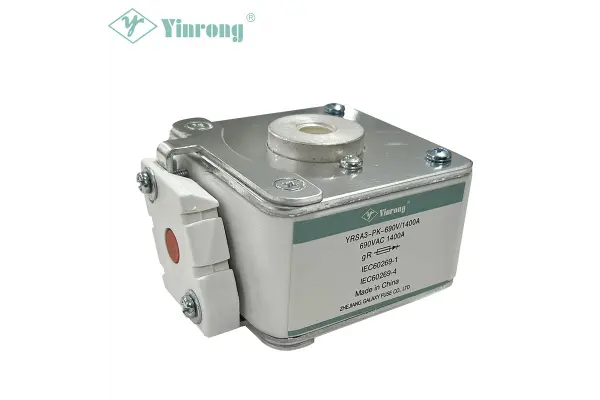
When a project moves quickly, fuse selection can easily become rushed. The following checklist helps both technical and purchasing teams communicate with fewer mistakes.
- Confirm whether the circuit is AC, DC, or a mixed power conversion environment.
- Confirm the maximum system voltage and possible transient conditions.
- Confirm the continuous operating current and expected current fluctuation.
- Check available short-circuit current at the fuse installation point.
- Identify whether the fuse protects a cable, battery, capacitor, converter, or semiconductor module.
- Ask for I²t information and compare it with the protected component’s withstand capability.
- Review temperature rise under realistic cabinet conditions, not only ideal laboratory conditions.
- Check whether the fuse body, bolt distance, terminal style, and dimensions match the cabinet layout.
- Confirm applicable standards or project requirements before ordering.
- Discuss lead time, sample testing, documentation, and replacement plan with the supplier.
This checklist may look simple, but it prevents many expensive mistakes. A fuse that is technically strong but mechanically unsuitable can delay installation. A fuse that is affordable but poorly matched to semiconductor protection can cost far more during a fault. A fuse that runs acceptably in open air may become too hot inside a sealed cabinet. Selection must connect the datasheet to the actual system.
How Zhejiang Galaxy Fuse Co., Ltd. Supports Safer Selection
Zhejiang Galaxy Fuse Co., Ltd. provides fuse solutions for energy storage and semiconductor protection applications, including product categories such as BS88 standard high-speed fuse, North American style stud-mount high speed fuse, and square body ultra rapid fuse. These product directions are relevant for buyers working with converters, rectifiers, inverters, battery energy storage systems, regenerative drives, power supplies, capacitors, and semiconductor equipment.
For buyers, supplier support matters because an ESS and Semiconductor High Speed Fuse is rarely selected in isolation. The final decision may depend on cabinet structure, required voltage level, operating current, expected short-circuit current, mounting dimensions, and the type of component being protected. A responsive supplier can help review whether a standard model is suitable or whether the project needs a more specific fuse structure.
When communicating with Zhejiang Galaxy Fuse Co., Ltd., buyers can prepare a few details in advance: system voltage, normal current, peak current, fault current estimate, AC or DC condition, protected equipment type, installation drawing, and any required standards. This information helps shorten the model confirmation process and reduces the risk of ordering a fuse that later needs to be changed.
The strongest purchasing decision is not always the cheapest one. It is the decision that reduces downtime risk, supports stable thermal behavior, protects valuable power electronics, and fits the real installation environment. For high power systems, that kind of fit is worth taking seriously.
FAQ
What is the main purpose of an ESS and Semiconductor High Speed Fuse?
Its main purpose is to interrupt abnormal overcurrent conditions quickly and limit the energy that can reach batteries, converters, inverters, rectifiers, capacitors, and semiconductor devices. It helps reduce equipment damage during short-circuit or overload events, depending on the fuse class and application design.
Is lower temperature rise always better for high speed fuses?
Not always. Lower temperature rise can improve thermal comfort inside the cabinet, but fuse protection must also remain fast and reliable. A fuse should be judged by thermal behavior, I²t, current-limiting capability, breaking capacity, and suitability for the protected component.
Do ESS projects always need the same fuse as semiconductor equipment?
No. ESS projects and semiconductor equipment can overlap in protection requirements, but the correct fuse depends on the circuit location, current level, voltage, fault current, and protection target. A battery cabinet, inverter, and power module may require different selection priorities.
Which information should I provide before asking for a fuse quotation?
Prepare the rated voltage, AC or DC condition, rated current, peak current, short-circuit current estimate, application equipment, installation dimensions, operating temperature, and any required standard or certification preference. This allows the supplier to recommend a closer match.
Can one fuse model cover every high power protection application?
No. High power systems vary widely. A square body ultra rapid fuse may suit one converter design, while a stud-mount or BS88 style high speed fuse may fit another. Selection should be based on electrical performance, mechanical fit, and actual working conditions.
Final Advice and Contact Us
Choosing an ESS and Semiconductor High Speed Fuse should never be reduced to a quick match of current rating and price. The safer approach is to compare voltage, fault current, I²t, operating class, temperature rise, installation space, and the value of the equipment being protected. For energy storage cabinets and semiconductor power systems, the fuse is a small component with a large responsibility.
If you are selecting fuses for ESS, converters, inverters, rectifiers, batteries, regenerative drives, or semiconductor protection projects, Zhejiang Galaxy Fuse Co., Ltd. can help you review the application conditions and recommend a suitable product direction. Share your system details with our team and contact us today to discuss a safer, more reliable fuse solution for your next project.